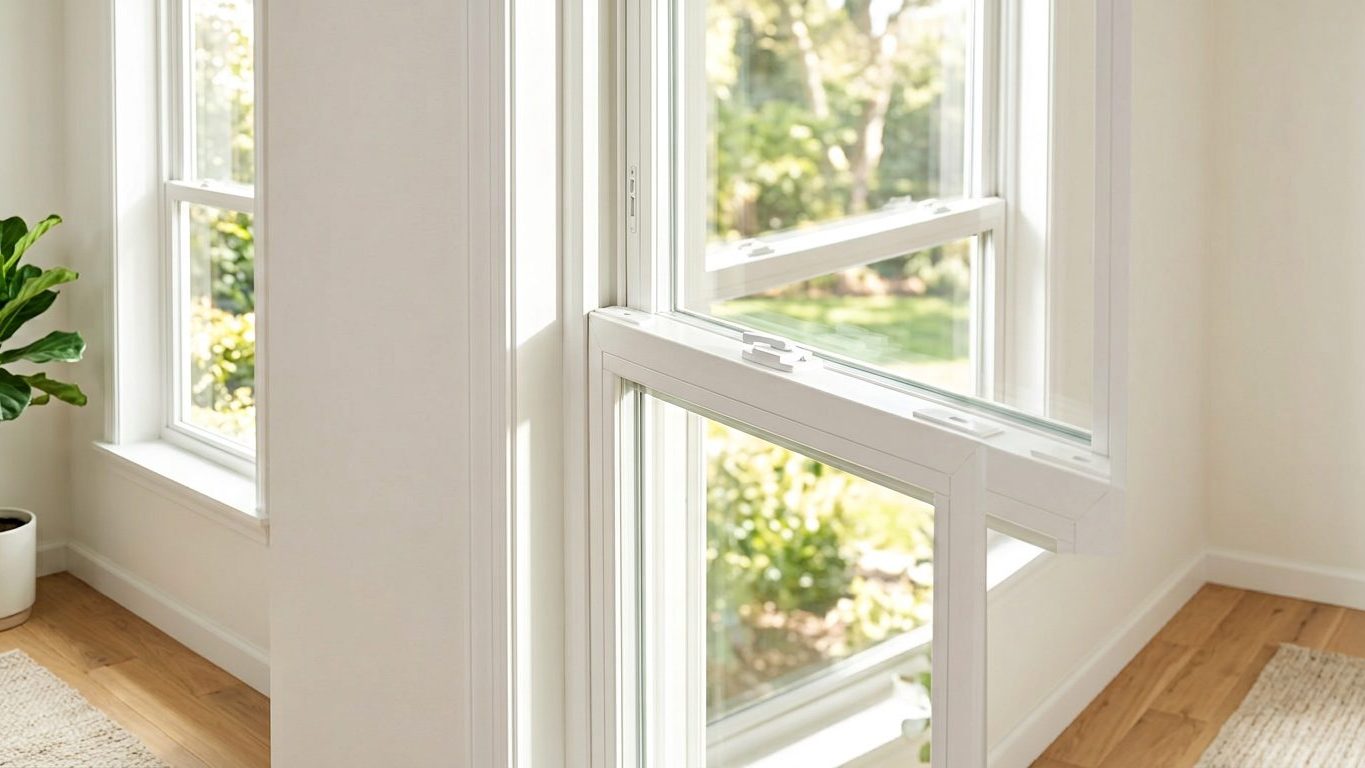
When Is the Right Time to Replace Your Windows?
Drafts, condensation and rising bills are all quiet signals worth acting on early.
Drafts, condensation, warped sashes and rising energy bills are all quiet signals. Here is how to recognise them, and how to plan a replacement that genuinely improves the way your home performs.
There is a particular kind of quiet failure that goes with ageing windows. Nothing dramatic happens. A room is slightly colder near the glass in the morning. A curtain sits a little damp by midwinter. A sash takes a little more effort than it used to. On their own these seem too small to worry about, and that is precisely why they go unaddressed for so long.
By the time a window is obviously broken — stuck, rotted, or rattling in the wind — the problem has usually been developing for years. Frames warp, seals harden, glazing loses its insulating gas, and the installation around the opening stops being weather-tight. At that point you are no longer improving the house, you are managing a slow leak in both comfort and money.
The good news is that most windows do not announce their end. They give you a set of signals, and if you learn to read them you can plan a replacement on your own terms rather than in a panic. Here are the ones we look for when homeowners ask us to take a look.
Condensation on the inside of the glass in winter is a clear sign that the window is losing heat faster than the room can keep it. A single misty morning is nothing to worry about. Condensation that appears every cold day, runs down the glass and starts staining the surrounding frame is a different matter entirely. That pattern usually points to an inadequate air gap, a failed seal, or simply an old single-glazed unit doing its best in a job it was never designed for.
It is worth noting that condensation can also be a ventilation problem rather than a window problem. If the room is humid and air is not escaping, any cold surface will mist over. This is why we never diagnose a window purely from the inside — we look at the frame, the sill, the trim and the surrounding wall assembly before we reach a conclusion.
Run your hand along the frame on a cold day, particularly around the meeting rails and the perimeter of the sash. If you can feel air moving, the window is not performing. Many owners first notice this as a curtain moving in a still room, or as a bedroom that simply will not stay warm no matter how the thermostat is set.
Draughts are often blamed on the glass, but the glass is rarely the culprit. Air usually leaks around the sash, through a failed weather seal, or where the original installer did not properly seal the perimeter. That distinction matters, because fixing the wrong part means paying twice for the same problem.
A window that needs lifting, pulling or holding to close is telling you the frame has moved. Wood swells and shrinks with seasonal humidity, aluminium expands, and vinyl can soften and distort when a seal has failed and water gets behind it. Once the sash no longer sits square in the opening, the frame is under constant strain and the locks, hinges and seals will only get worse.
There is also a security dimension here. A window that will not lock properly, or that can be pushed open from outside, is not a security feature in any meaningful sense. If you are replacing windows anyway, this is the moment to consider improved locking hardware and properly fitted security screens.
Look closely at the sill and the lower rail, where water collects and sits longest. Paint that is peeling in flakes, wood that feels soft or spongy, or a frame edge that has crumbled, all point to moisture getting in. Swollen, blistered paint is another reliable warning because it means water has been moving between the timber and the coating for some time.
Pay attention to the exterior trim around the opening as well. If the trim is decayed but the frame looks fine, the problem may be limited and repairable. If rot has travelled into the frame and the wall cavity, the window and the surrounding structure need to be addressed together, which is a much larger and more expensive decision.
Energy costs fluctuate for all sorts of reasons, so a single expensive season proves very little. What is meaningful is a consistent pattern. If you have replaced seals, added draught excluders and adjusted your heating habits, and the same rooms remain stubbornly cold while the rest of the house heats normally, the windows are a very reasonable suspect.
We also look for uneven temperatures across a room. A warm spot near a radiator and a cold strip along a glazed wall is a pattern that usually points straight back to the glazing and the frame rather than the heating system.
Start with the room you use most, rather than the whole house at once. If replacing everything is not practical, working outward from the worst-performing room lets you spread the cost without leaving the house half finished. A whole-house replacement does have real advantages — consistent profiles, one coordinated installation, one warranty — but there is no shame in a phased approach.
Whatever route you take, insist on a proper inspection of the opening rather than a quote based on counting windows on a web page. The condition of the sill, the wall cavity, the trim and the surrounding plaster is what determines whether an installation is straightforward or whether it turns into a bigger job. That assessment is the part that should be done carefully and honestly, because it is the part that cannot be undone later.
Finally, ask to see the installation method rather than just the product sample. Good windows perform badly if the surrounding opening has not been properly prepared, flashed and sealed. A photograph of a completed installation tells you more about the quality of a company than a showroom display ever will.
The best time to replace windows is before the problem becomes urgent — and usually before it becomes obvious.
Nova House GroupReplacing windows is rarely the most exciting project a house will ever need, but it is consistently one of the most noticeable. A properly installed window changes how a room feels long before anyone can explain why.
If you would like an honest opinion on your own windows, or you are weighing up options for a project that involves more than the glass — flooring, interior work, security or energy upgrades — the Nova House Group team is happy to visit the property and talk it through. Call the office, or use the contact form and we will arrange a consultation at no cost and with no obligation.
Practical guidance on caring for, improving and protecting your home.
Drafts, condensation and rising bills are all quiet signals worth acting on early.

The sequence you choose can protect your panels, your roof and your investment.

Layout before tile, storage before taps, ventilation before finishing.